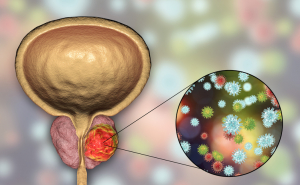

Concern for men’s health is often accompanied by silence, procrastination, and a tendency to ignore minor problems. When it comes to the prostate gland, which plays a crucial role in both the reproductive and urinary systems, the body usually sends only very subtle signals.
Prostate cancer is one of the most common malignant tumors among men. However, when detected at an early stage, it offers extremely high rates of successful treatment and disease control. Understanding the difference between a benign condition and a genuine warning sign allows men to take timely action, turning awareness into one of the most powerful forms of self-protection. In this article, we will examine the biological mechanisms behind the disease and the symptoms that should never be ignored.
How Does Prostate Cancer Develop? The Hormonal Cascade Behind the Disease
Prostate cancer develops as a result of the uncontrolled multiplication of cells lining the internal structures of the prostate gland and producing part of the seminal fluid. Under normal conditions, the growth of these tissues is maintained through a finely balanced biochemical system.
The brain sends signals that regulate the production of androgen hormones, which enter the bloodstream and reach the prostate gland. Once inside the gland, the enzyme 5-alpha reductase converts testosterone into dihydrotestosterone, a much more potent derivative hormone. Dihydrotestosterone binds to androgen receptors located on the surface of prostate cells, instructing them to grow and divide.
The biological problem begins when genetic mutations occur in cellular DNA. These changes disrupt the body's natural control mechanisms. Affected cells ignore signals that should stop their growth and no longer respond to programmed cell death, the process that removes old or damaged cells. As a result, mutated cells continue to multiply indefinitely and gradually accumulate, forming a tumor mass that spreads into surrounding tissues.
Why Are the Early Stages of Prostate Cancer Often Invisible?
Understanding the anatomy of the prostate helps explain why this disease can remain undetected for such a long time. The prostate gland surrounds the urethra, the tube through which urine leaves the bladder. However, in the vast majority of cases, the tumor develops in the peripheral zone, the outermost part of the gland located farthest from the urethra. Because of this specific location, the tumor initially grows outward and does not put pressure on the urinary tract. The patient feels completely normal and experiences no discomfort while urinating.
Only when the disease progresses and the tumor becomes significantly larger, or if the tumor initially develops closer to the center of the gland, does the cancerous tissue begin to compress the urethra. This mechanical compression obstructs the flow of urine and causes the first noticeable physical symptoms.
Which Symptoms Should Be Monitored?
Compression of the urinary tract alters the normal function of the bladder, forcing it to work harder to empty itself. This muscular strain and urinary retention trigger a series of very specific physiological responses.
The main warning signs that require attention include:
• weakened urine flow;
• frequent nighttime urination;
• a feeling of incomplete bladder emptying.
The presence of blood in the urine or semen is less common but also requires urgent medical evaluation.
Many men over the age of fifty consider slower urination or the need to get up more frequently at night to be an inevitable part of aging. Unfortunately, this attitude can result in the loss of valuable time. The appearance of these symptoms should not cause panic, but it should encourage a visit to a urologist. Specialists at Bogolyuby Medical Center warn that ignoring the first warning signs allows the disease to progress, whereas early detection significantly simplifies treatment and improves outcomes.
Number of views: 340