
Leg pain and swelling are common problems that affect many people. They are more common in older individuals, but they can occur at any age. In many cases, leg pain does not appear on its own and may be preceded by swelling.
Leg swelling is more common in women who spend long periods standing or sitting. This symptom is so widespread that it may go unnoticed, as if it were an inevitable consequence of everyday activities. However, when swelling is accompanied by a feeling of heaviness and pain, it raises the first concerns and encourages the patient to seek medical attention.
Since swelling and pain in the legs may indicate various diseases, it is important to carefully determine the cause. In such situations, a consultation with a phlebologist at the Bogolyuby Medical Center will help assess the presence of pathological conditions and take timely measures to eliminate them.
What aspects are considered during diagnosis?
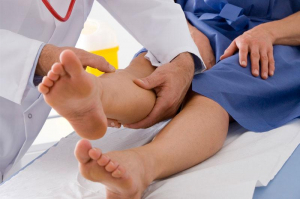
During the examination, the phlebologist will assess whether swelling is present in addition to pain, whether the pain affects one or both legs, whether it is accompanied by a sensation of heat, whether it appeared suddenly, whether it is localized in the joints, whether it is the result of trauma, or whether it is associated with other symptoms such as back pain.
The doctor must also obtain information about any medications being taken, such as contraceptive pills, corticosteroids, or calcium channel blockers, as well as about the general state of health, with special attention to liver, kidney, and thyroid function. Evaluating these parameters will help formulate a preliminary diagnosis, which will then be confirmed through clinical examination.
What are the possible causes?
To treat leg pain effectively, it is crucial to establish the correct diagnosis and identify the underlying cause. The most common causes of leg pain and their associated symptoms are listed below.
Peripheral artery disease causes leg pain that occurs during walking and disappears at rest. Cold feet may also be felt. This is a serious condition, and its most common symptom is intermittent claudication. The pain gradually increases to the point that movement becomes impossible. It disappears after a short period of rest and returns during physical activity. If the pain persists despite rest, urgent examination is required, as it may indicate a severe arterial occlusion.
In cases of varicose veins, the legs often hurt in addition to swelling, especially after several hours of standing. There is often a sensation of increased warmth around the varicose veins, sometimes accompanied by severe itching. In the early stages, eczematous skin changes may appear and gradually worsen, potentially leading to varicose ulcers.
Thrombosis usually occurs in one limb. The affected leg appears swollen and hot, and the swelling becomes painful. Immediate medical attention is required because a clot may detach, enter the pulmonary circulation, and cause death due to embolism. Venous thrombosis is a serious complication of certain diseases. Therefore, pulmonary embolism should be suspected when sudden chest pain occurs in patients with disorders of deep venous circulation.
What should you do if your leg hurts?
Since leg pain in most cases is a symptom of underlying diseases, the cause must first be identified in order to treat it properly. Treatment — pharmacological or otherwise — for this type of disorder will vary depending on the main cause.
If leg pain is caused by conditions such as arthritis or sciatica, a doctor may recommend nonsteroidal anti-inflammatory drugs such as ibuprofen or diclofenac, which have both anti-inflammatory and pain-relieving effects. However, if the pain is caused by thrombosis, the doctor may prescribe preventive therapy with anticoagulants to prevent the formation of new clots. Regardless of the underlying cause, leg pain should not be underestimated, as it may be a warning sign of a serious problem.
Number of views: 154