
The Pap smear is named after its inventor, physician Georgios Papanikolaou, who developed the test in the 1940s. This screening test is used to detect any cellular changes in the cervix, known as dysplasia, which may be the first signs of cervical cancer.
A Pap test does not detect cancer directly, but it identifies cellular changes that may indicate a predisposition to its development. The smear is also useful for detecting vaginal infections. However, it is important to emphasize that it is not a test for sexually transmitted infections. The purpose of this screening test is to identify early abnormalities that may indicate cancer and thereby enable timely treatment.
When Should You Have a Pap Test?
Today, the Pap smear is often accompanied by a human papillomavirus (HPV) test, as HPV infection is considered a major risk factor for the development of cervical cancer. The frequency of these two tests may vary.
The ideal time for the examination is between the tenth and fourteenth day of the menstrual cycle.
If the HPV test is positive, the Pap smear becomes a follow-up diagnostic test that helps identify any cellular abnormalities.
If the Pap test is negative, it should be repeated annually. In the presence of certain risk factors, a gynecologist may recommend more frequent examinations. These risk factors include a positive Pap smear result, HIV infection, and a weakened immune system.
How Is a Pap Smear Performed?
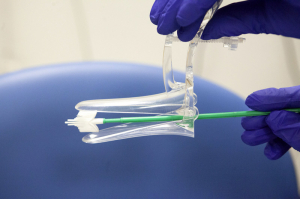
A Pap smear is a quick and relatively simple procedure. It can be performed at the Bogolyuby Medical Center during a routine gynecological examination. The doctor uses a speculum—an instrument that gently opens the walls of the vagina to expose the cervix. Using a small spatula or brush, the doctor carefully collects cells from the surface of the cervix. These cells are then placed on a microscope slide or immersed in a special liquid for microscopic analysis. The entire procedure takes only a few minutes and, although it may be somewhat uncomfortable, it is usually not painful. It does not require anesthesia or special preparation.
What Should You Do If the Result Is Positive?
A positive Pap smear result does not necessarily indicate the presence of cancer. It often means that cellular changes, known as squamous intraepithelial lesions (SIL) or dysplasia, have been detected. These changes may progress to cancer if left untreated.
In such cases, a specialist may recommend additional diagnostic tests to clarify the situation, such as colposcopy—an examination that allows a more detailed assessment of the cervix—or a biopsy to obtain a tissue sample.
If the abnormalities are minor, the doctor may decide to monitor them over time through regular examinations. In cases of high-grade lesions, treatment may be required, including the removal of abnormal cells, for example, with laser therapy. Early diagnosis and timely intervention are crucial in preventing the development of cancer.
Pap Test and Fertility
A Pap smear itself has no direct effect on a woman’s fertility. It is a simple diagnostic screening procedure that does not affect the ability to conceive. However, some conditions that may be detected through this test, such as HPV infection or other genital infections, can affect fertility if they are not properly treated.
In rare cases, treatments used to remove precancerous cells from the cervix may affect fertility. For example, conization—a surgical procedure in which a portion of the cervix is removed—can sometimes lead to complications that may affect a woman's ability to carry a pregnancy to term. However, these risks are generally low and should be carefully discussed with a healthcare provider before undergoing any procedure.
Number of views: 530