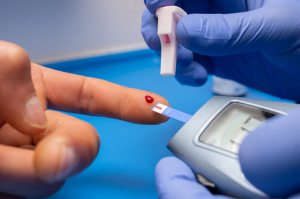

When a couple tries to conceive a child but unsuccessfully, stress arises, and it increases if a condition such as hyperinsulinemia is suddenly detected. What should be known in this regard? Insulin is a hormone produced by the pancreas that plays a vital role in regulating blood glucose levels. When the body does not respond properly to insulin, the pancreas usually produces more of it to compensate, which leads to hyperinsulinemia — chronically elevated levels of this hormone. Unfortunately, this condition is also associated with reproductive function in both women and men and, therefore, may disrupt hormonal balance, ovulation, egg quality, and sperm production, complicating fertility. Let us consider the situation in more detail.
Insulin and female fertility
In women, high insulin levels can disrupt hormonal balance and ovarian function, affecting the synthesis of LH and FSH hormones. This causes irregular menstrual cycles or even anovulation. Insulin resistance is present in a large percentage of women with hyperandrogenism, even in the absence of obesity. In these patients, excess insulin stimulates androgen production and reduces the availability of sex hormone-binding globulin.
High insulin levels can affect oocyte development by disrupting the endometrial environment necessary for normal embryo implantation. This leads to the risk of implantation failure even when using assisted reproductive technologies, increasing the risk of early miscarriage.
It should be noted that metabolic control of insulin levels can reduce all these complications. Women with hyperinsulinemia are not necessarily infertile; many are able to conceive and carry a pregnancy.
Insulin and male fertility
In men, the situation is more complex and more difficult to control. Scientific studies show reduced sperm motility, morphological changes, and low testosterone levels in patients with hyperinsulinemia. In practice, high insulin levels may reduce the production of SHBG, a glycoprotein that regulates sex hormones; this leads to increased estrogen levels and decreased free testosterone levels, causing an imbalance that affects spermatogenesis and libido.
Chronically high insulin levels, especially when combined with obesity or type 2 diabetes, are often associated with erectile dysfunction. It is important to remember that studies of the direct effect of elevated insulin levels on male fertility often overlap with broader metabolic conditions such as diabetes and metabolic syndrome.
High insulin levels: what are the risks?
High insulin levels may indicate progression of type 2 diabetes — a chronic disease that can worsen reproductive function in both men and women and pose a risk to both mother and fetus during pregnancy. This increases the risk of miscarriage, preeclampsia, gestational diabetes, fetal macrosomia, and congenital anomalies; later, the child has a higher likelihood of developing diabetes. In men, uncontrolled high insulin levels associated with diabetes may eventually cause neuropathy and vascular damage.
Where to seek help?
In general, with high insulin levels it is best to consult a specialist to control its level and prevent complications. In particular, if fertility is affected by insulin resistance or a related metabolic disorder, it is important to contact a center that ensures the presence of a multidisciplinary team including an endocrinologist, gynecologist, and andrologist. At MC “Bogolyuby,” highly qualified and experienced specialists provide assessment, diagnosis, and therapy of interrelated metabolic and reproductive disorders, offering personalized programs to increase the chances of conception, including with the help of assisted reproductive technologies.
Number of views: 1271